Consumer Reports Reveals 3 Questions To Always Ask During A Private Car Sale
Consumer Reports recommends asking private owners why they are selling the car, if they were the primary driver of the car, and whether they bought it used.
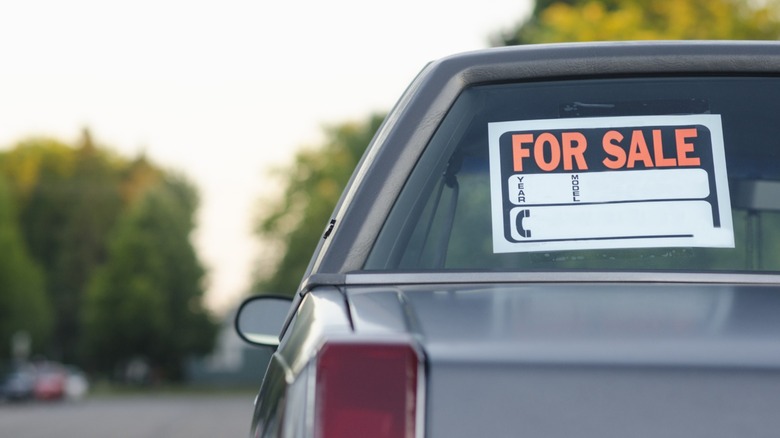
Buying a car via a private listing, instead of going through a dealership, can mean saving a lot of time and money — upfront, that is. While purchasing a vehicle from a private owner may not come with the same sneaky tricks that dealerships often use to charge you more, it can be riskier in other ways. From signs of Facebook Marketplace scams (which also applies to Craigslist and other local listing sites) to seller dishonesty, you could end up on the hook for any undisclosed issues. That's why asking the right questions from the get-go can be crucial. In its Used Car Checklist, Consumer Reports (CR) revealed three key questions prospective buyers should be ready to ask private sellers before signing any paperwork — or paying any money.
To start, you'll want to ask how long the seller has owned the car — and whether they have owned it since it was new, or purchased it used themselves. This can help you determine if the seller has the vehicle's entire history. Next up, CR recommends asking the seller if they have been the primary driver of the car while it's been in their possession. And last but not least, ask why they are selling the car in the first place. While these three questions should not be the full extent of your research, they can serve as a solid jumping off point to dive deeper into anything that may be unclear about the car.
Always ask for documented vehicle history, even from sellers you trust
Along with asking key questions about the vehicle's history, you should also be asking for receipts. Even a seller who seems trustworthy might omit pertinent information affecting the car's value. If the owner insists the car has been routinely cared for but can't back it up, consider verifying the information independently by running the VIN number through a service like Carfax or something similar. Many honest sellers may already be willing to do this themselves if they haven't kept receipts on file, so be wary of anyone acting evasive or trying to push the sale without allowing you time to review the car's history.
It's also important to realize that the $3,000 rule for car buying – in which you should have $3,000 saved for car expenses — still applies to private sales. You'll need to pay registration fees, insurance, and general maintenance costs in addition to whatever upfront price you pay. With that in mind, not knowing your car's accident history or whether it's been well-maintained could ruin your budget and lead to thousands more in repair costs sooner rather than later. Ultimately, asking for important information before agreeing to any kind of large purchase can help you get a better idea of what to expect.
Prices, rates, and rules change. This is reporting, not personal financial, tax, or investment advice.